Traer vs Llevar
Learn the difference between traer and llevar in Spanish, with a simple direction rule, clear examples, and an explanation of how the reference point changes the verb.
Traer vs Llevar
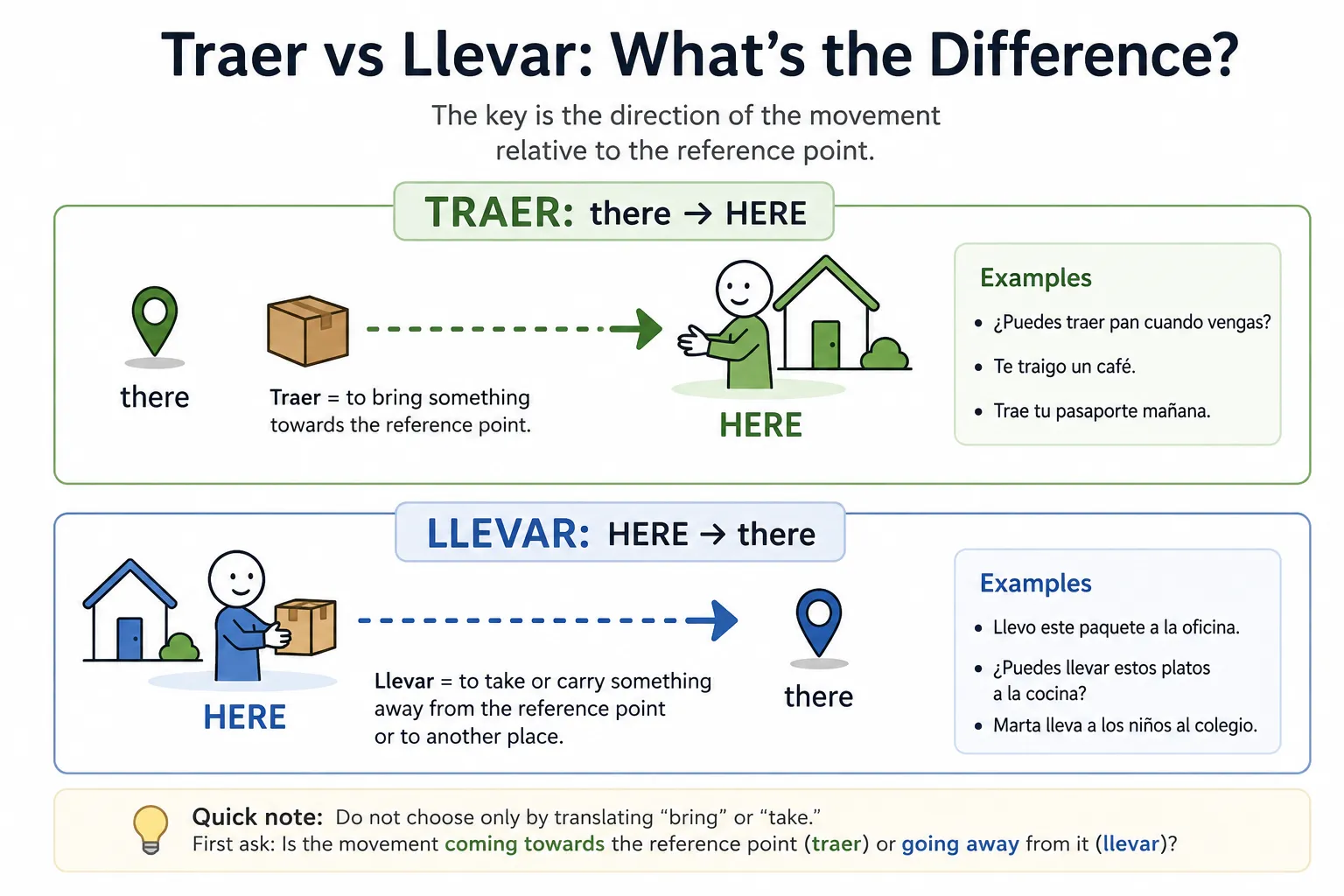
What is the difference between traer and llevar? Both verbs describe moving a person or thing from one place to another, but the key difference is the direction of the movement relative to a reference point.
Meaning
- traer — to bring someone or something towards the reference point
- llevar — to take or carry someone or something away from the reference point or to another destination
traer → there → HERE
llevar → HERE → there
“HERE” is a conceptual reference point. It does not always mean the speaker’s current physical location: it can be the listener, a meeting place, or another place that matters in the conversation. The same reference-point idea also helps when choosing between ir and venir.
How to use it
Traer: movement towards the reference point
Use traer when the movement comes towards the place or person that is the relevant reference point.
¿Puedes traer pan cuando vengas?
Can you bring some bread when you come?
Te traigo un café.
I’ll bring you a coffee.
Ella vive en Madrid.
She lives in Madrid.
Llevar: movement to another destination
Use llevar when something or someone moves from the reference point to another destination. It can be used with both things and people.
- Llevo este paquete a la oficina.
I’m taking this parcel to the office. - ¿Puedes llevar estos platos a la cocina?
Can you take these plates to the kitchen? - Marta lleva a los niños al colegio.
Marta takes the children to school.
The reference point can change
Imagine you are at home and your friend is already at a party. Your friend says:
¿Puedes traer vino?
Can you bring some wine?
From your friend’s perspective, the wine is moving towards the party, so the party is the reference point.
You might describe your plan like this:
Voy a llevar vino a la fiesta.
I’m going to take some wine to the party.
This describes the same physical movement from your starting point: the wine is going from where you are to another destination, so llevar is natural.
The same movement can sometimes be described with traer or llevar depending on the conversational reference point.
Compare
- Trae tu pasaporte mañana.
Bring your passport tomorrow.
The passport moves towards the place where the people will meet. - Lleva tu pasaporte al consulado.
Take your passport to the consulate.
The passport moves towards another destination. - Voy a tu casa. ¿Quieres que traiga algo?
I’m coming to your house. Do you want me to bring anything? - Voy a casa de Ana. Tengo que llevar el postre.
I’m going to Ana’s house. I have to take the dessert.
Common mistake
Do not choose traer or llevar only by translating the English words “bring” and “take.” Instead, ask: Where is the movement going relative to the reference point?
- towards the reference point → traer
- away from the reference point or towards another destination → llevar
Other meanings of llevar
Llevar has several other common meanings, but they are not the focus of this comparison:
Llevo una chaqueta negra.
I’m wearing a black jacket.
Llevo tres años viviendo aquí.
I’ve been living here for three years.
This page focuses specifically on traer vs llevar when they describe movement. The llevar vocabulary note explains its other everyday uses.