Gustar
Gustar in Spanish
Gustar means “to like”, but its structure is different from English.
- Me gusta el café. — I like coffee.
Literally, it means “Coffee is pleasing to me.”
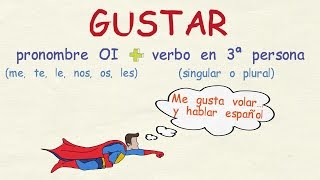

You only need to watch one video.
How to Use Gustar
me / te / le / nos / os / les + gusta / gustan
| Pronoun | Meaning |
|---|---|
| me | I like |
| te | you like |
| le | he / she / you (formal) likes |
| nos | we like |
| os | you (plural, Spain) like |
| les | they / you (plural) like |
Examples:
- Me gusta el café. — I like coffee.
- Te gusta la música. — You like music.
- Le gustan los perros. — He / she likes dogs.
Gusta vs Gustan
The verb changes depending on what is liked, not who likes it.
- gusta — one thing or an activity
- gustan — plural things
Compare:
- Me gusta el libro. — I like the book.
- Me gustan los libros. — I like the books.
- Me gusta leer. — I like reading.
Remember Articles? Spanish normally uses el / la / los / las when talking about things you like in general:
- Me gusta la música. — I like music.
Saying Who Likes Something
Use a + person to specify who likes something:
- A Ana le gusta el café. — Ana likes coffee.
- A Pablo le gustan los perros. — Pablo likes dogs.
Keep le even when you mention the person’s name.
Negative Sentences
Remember Basic Negation? Put no before the pronoun.
- No me gusta el café. — I don’t like coffee.
- No me gustan los gatos. — I don’t like cats.
Quick Rule
- Me gusta + singular noun / infinitive
- Me gustan + plural noun
- No me gusta… — I don’t like…
Don’t say yo gusto el café. Say me gusta el café.
Active Recall
Without looking at the examples, say these in Spanish:
- I like coffee.
- I like books.
- I like reading.
- I don’t like coffee.
- Do you like music?