Basic Prepositions
Basic Prepositions
Prepositions are short words that connect people, places, things, and time expressions. These are useful in simple A1 sentences.
You have already met de in soy de… and en in vivo en…. Start with a, de, en, con, and sin. Treat hasta, durante, conmigo, and contigo as extra reference to revisit when you need them.
| Preposition | Basic meaning | Example |
|---|---|---|
| a | to | Voy a Madrid. — I am going to Madrid. |
| de | from, of | Soy de Puebla. — I am from Puebla. |
| en | in, on, at | Vivo en Madrid. — I live in Madrid. |
| con | with | Vivo con mi familia. — I live with my family. |
| sin | without | Tomo café sin leche. — I drink coffee without milk. |
| hasta | until, up to | Trabajo hasta las cinco. — I work until five. |
| durante | for, during | Estudio durante una hora. — I study for an hour. |
Con: with
Use con for company or for something that accompanies or is included with something else:
- Hablo con los clientes. — I talk with the customers.
- Tomo pan con tomate. — I have bread with tomato.
- Bebo café con leche. — I drink coffee with milk.
With mí or ti, use the special forms conmigo (with me) and contigo (with you), written as one word. See Conmigo and contigo.
Hasta: until
With time, hasta marks the endpoint of an action:
- Trabajo hasta las cinco. — I work until five.
- La tienda está abierta hasta las ocho. — The shop is open until eight.
Hasta las cinco tells you when the action ends; it does not tell you how long it lasts. Hasta can also mark an endpoint in space: Camino hasta el parque. — I walk as far as the park.
Durante: duration
Use durante + a period of time to say how long something lasts:
- Estudio español durante una hora. — I study Spanish for an hour.
- Trabajo durante la mañana. — I work during the morning.
With a measured duration, durante is often optional: Estudio una hora also means “I study for an hour.” Compare durante una hora (a length of time) with hasta las cinco (an endpoint).
Two useful contractions
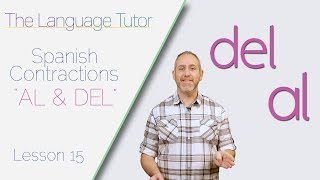
- a + el → al: Voy al mercado.
- de + el → del: Vengo del centro.
Use Prepositions of Place for expressions such as cerca de, delante de, and al lado de. You can study Por vs Para separately when you need those two prepositions in more detail.